

- OSAKA SALONE
- Official Event
- Seminar
“Photosynthetic Architecture”: Producing Oxygen and Energy through Plant Photosynthesis — with a Report on the Invited Exhibit at Milan Salone 2026
Official Event: Also featured on the ODW2026 Official page
From "Architecture That Is Built" to "Architecture That Is Planted":
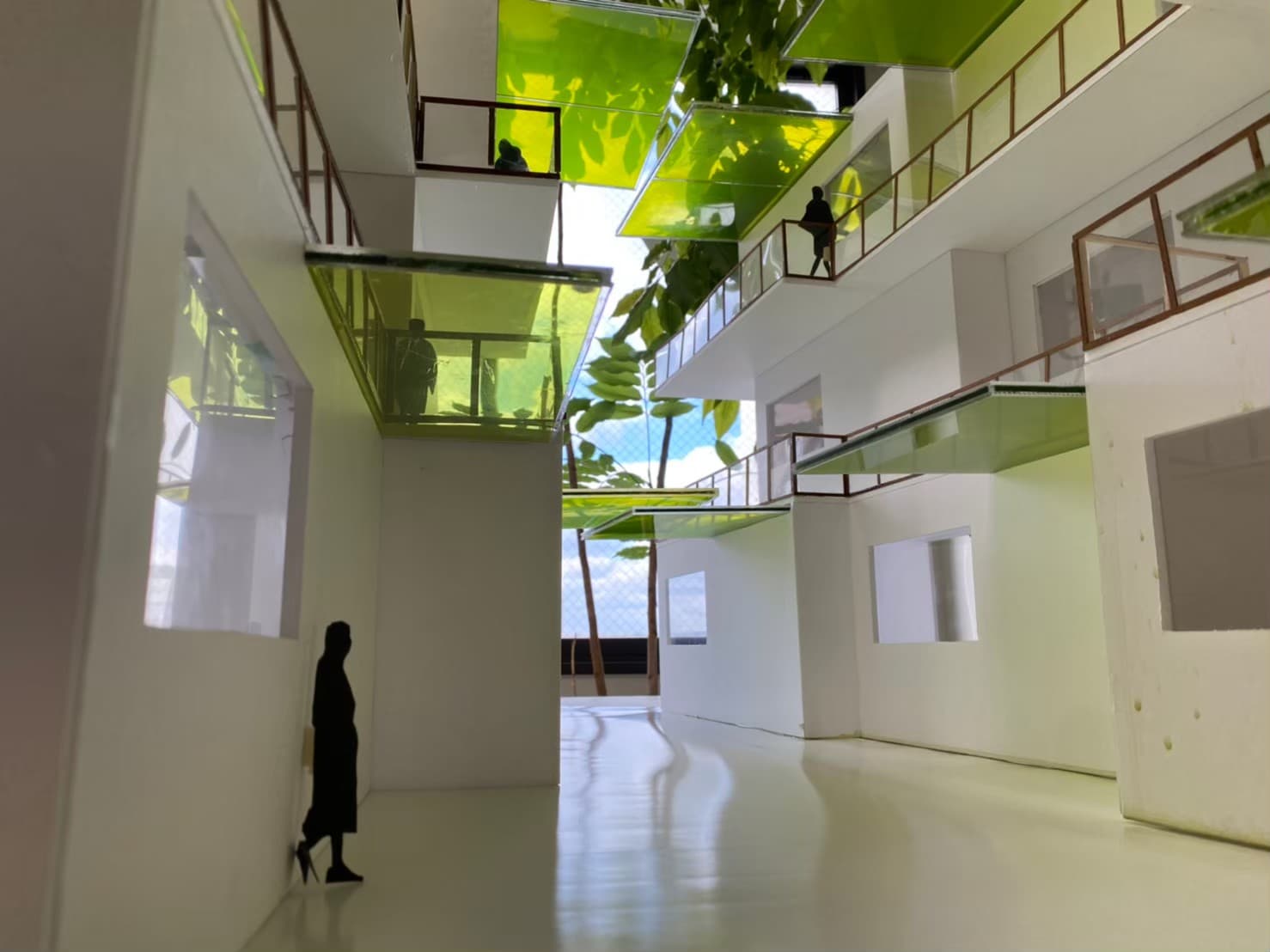
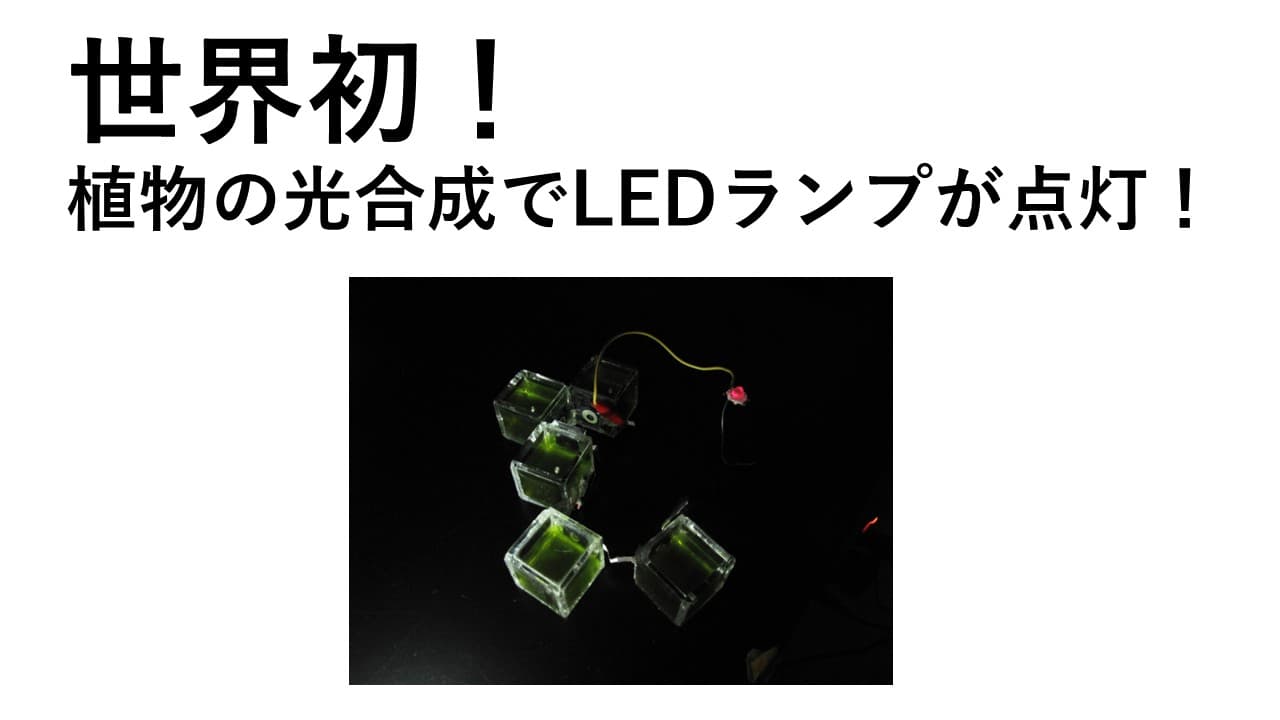
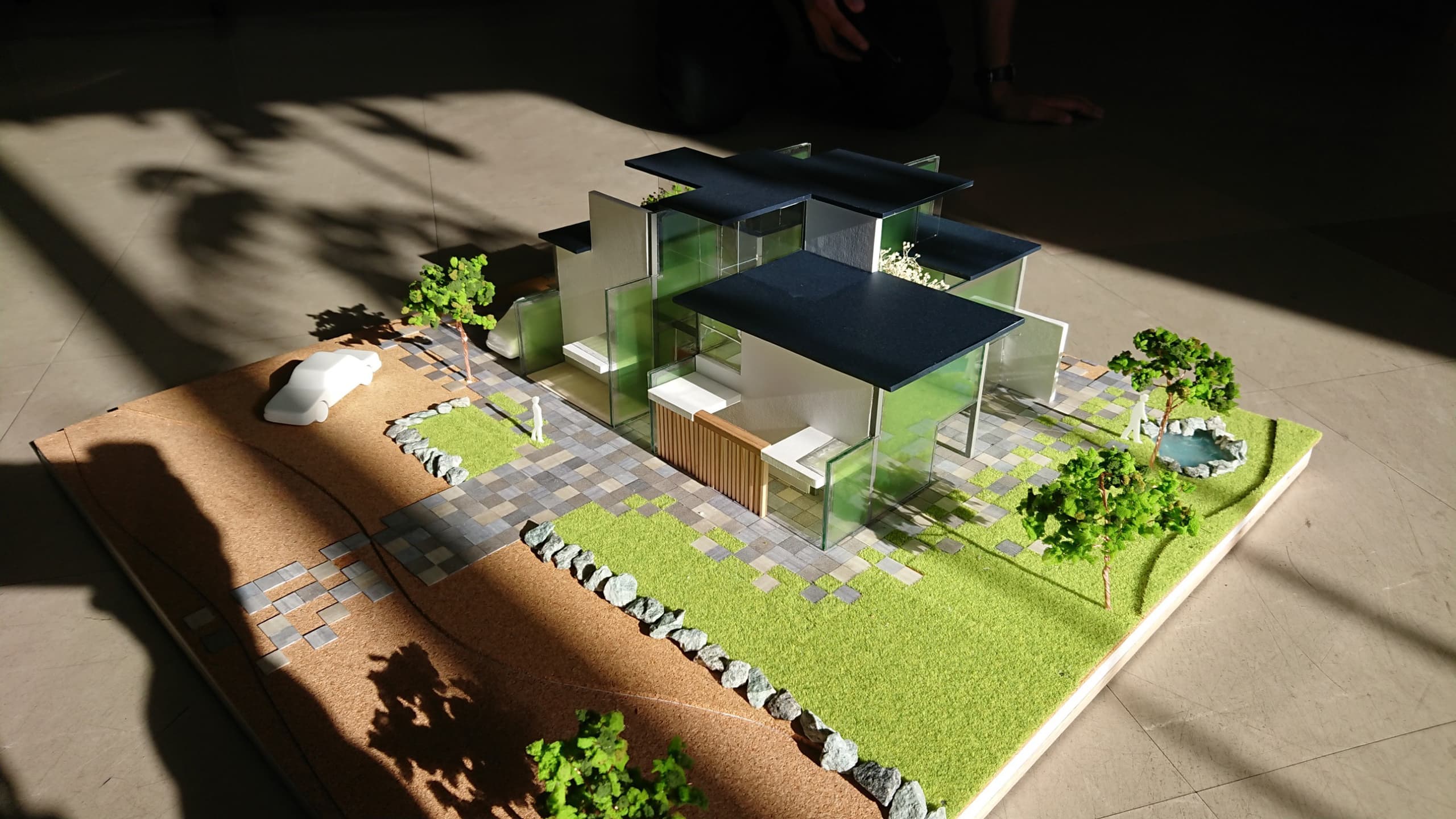
"Photosynthetic Architecture" is a proposal to make buildings function like trees. In conventional architecture, walls, windows and roofs play roles such as blocking or admitting light and protecting against wind and rain. In Photosynthetic Architecture, photo-biofuel cells that use plant chloroplasts are built into these elements, turning a building into an "environmental device that produces energy and oxygen" — research and a proposal that fuse design and science.
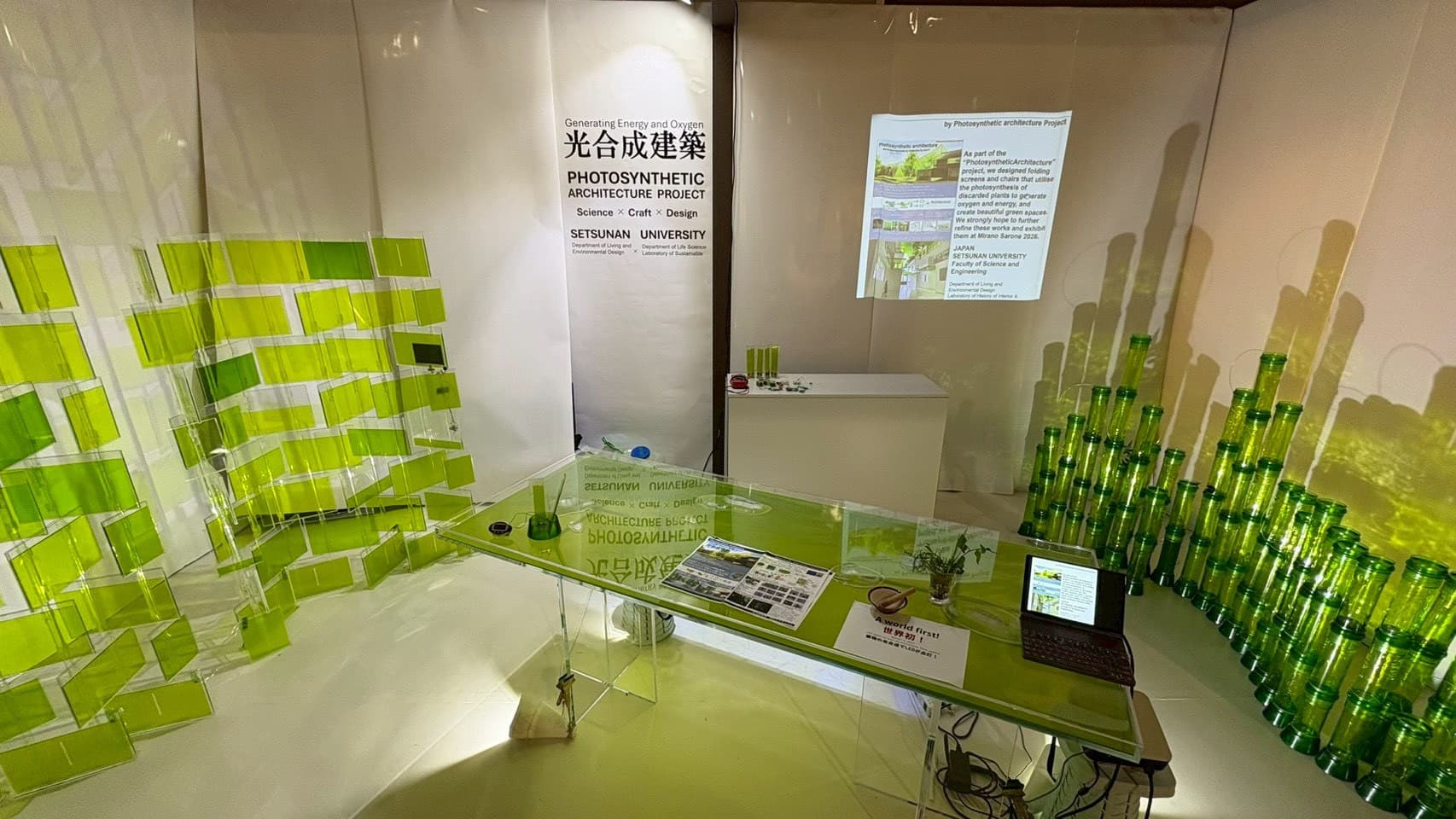
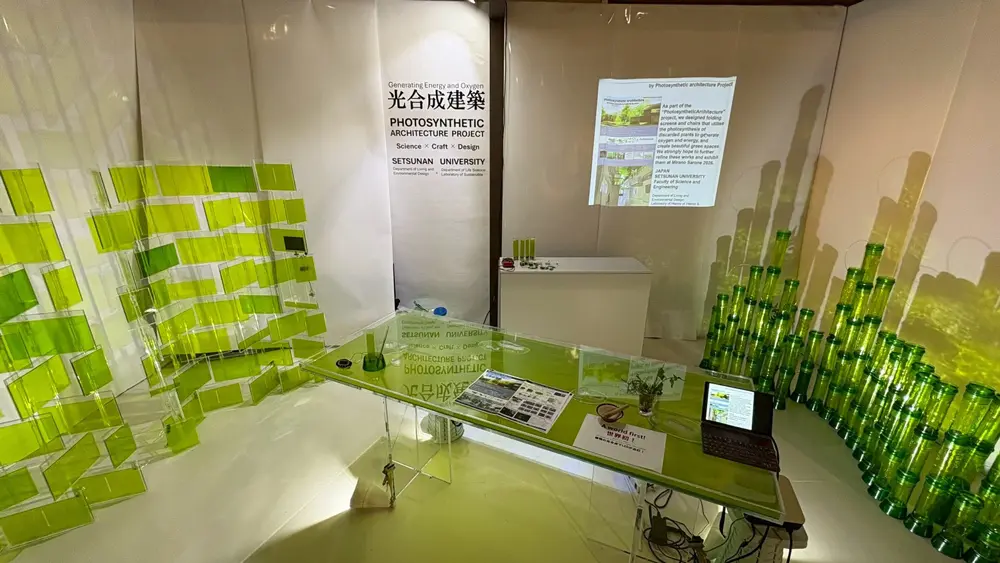
For example, chloroplasts are extracted from plants that would otherwise be discarded, such as leaves from felled trees or non-standard vegetables, and the solution is placed in translucent double panels or tubes and incorporated into windows, walls, roofs and furniture. The architecture itself then photosynthesizes and produces energy and oxygen. It is not simply "architecture that uses plants" but "an attempt to bring the functions of life into the very composition of architecture."
Proposed by Professors Kawakami and Matsuo of Setsunan University, this world-first proposal was invited to exhibit at Salone del Mobile.Milano in April 2026 and received great acclaim. This time, the actual piece will also be exhibited at OSAKA SALONE.
Speakers
Hinako Kawakami Professor, Department of Living Environment Design, Faculty of Science and Engineering, Setsunan University
Yasumitsu Matsuo Professor, Department of Life Sciences, Faculty of Science and Engineering, Setsunan University
Profiles

Born in 1963. Completed the doctoral program at the Graduate School of Kyoto Institute of Technology; Doctor of Philosophy (Academic Studies). Professor at Setsunan University since 2009. Her main research themes are the spatial concepts of the architect Eileen Gray, and a reassessment of the achievements of the Japanese artists Seizo Sugawara and Kichizo Inagaki, who collaborated with Gray in Paris. Her major papers include "A Study on Design Methods in Eileen Gray's Minimal House E.1027" and "The Background of Seizo Sugawara's Japanese Lacquer Art, Which Eileen Gray Studied" (winner of the Japanese Society for the Science of Design annual paper award), and her books include "Reconsidering Modernists" and "Modernism of Artists." In 2017 she began the joint interdisciplinary research "Photosynthetic Architecture" with Professor Matsuo of the Department of Life Sciences, and continues it to this day.
Born in 1968. Completed the master's program at the Graduate School of Tokyo University of Science and took up a post as assistant at the Faculty of Information Sciences, Teikyo Heisei University. Received a doctorate (Science) by dissertation from Tokyo University of Science in 1997 and became an assistant in the Department of Applied Physics, Faculty of Science, Tokyo University of Science. After serving as associate professor in the Faculty of Engineering at Setsunan University from 2007, he has been a professor in the Faculty of Science and Engineering there since April 2010. His specialties are bioenergy, environmental technology and materials, biophysics, functional physical chemistry and next-generation hydrogen energy. He focuses in particular on research into entirely new hydrogen-generation methods and fuel-cell electrolytes that use biomaterials, which are abundant in nature and have no environmental burden, and has published numerous papers in this field. In 2017 he began the joint interdisciplinary research "Photosynthetic Architecture" with Professor Kawakami of the Department of Living Environment Design, and continues it to this day.
| Date & Time |
Saturday, September 26, 2026, starts at 16:00
|
|---|---|
| Venue |
2-5 Hommachibashi, Chuo-ku, Osaka, Osaka 540-0029, Japan |
| Fee |
Free |
| Registration |
No application is required to attend. |